





Sunday, March 31, 2013

Wednesday, January 30, 2013
*How* Big? Scale & Objects
A recently recovered artifact is all the buzz in the Norse re-enactor's community.
It is a three dimensional depiction of a woman, cast in silver. The bottom of the figure has been broken off (thought to be plow damage from working the field it was discovered in).
 |
| The Harby 'Valkyre' - click to see the published image size (!) |
(Metal) Detectorist Morten Skovsby found the ... figurine late last year at Hårby on Funen, (Central Denmark)
Go to the report
Pulling a couple of the starting comments from the Norsefolk2 discussion group:
On 09/01/2013 04:24, Hilde wrote:The first rush was divided into to main topics:
Hopefully, a high quality scan will be available some time in the future.
On Tue Jan 8, 2013 6:15 Charles wrote:
This is where the fun starts, now begins the search for archaeology to back up the outfit worn by the figure.
The need is there to make this more than an artistic representation.
1) Depiction of female with sword and shield - 'proof' of women in combat.
2) Deciphering details of the clothing.
There is a gap between the falling hair and the back of the neck. Much was being made of this : A pendant? Hung as a ritual object* ?
( Of course since the bottom of the dress line is broken, we can not tell if the piece was flat based to sit on a table, or might have once had details of the feet.)
But before we go too far - Look at another object from the Viking Age which has also been examined and argued about in minute detail:
 |  |
'Odin fra Lejre '
by Tom Christensen
1,75 cm høj, 1,98 cm bred og 1,25 cm dyb,
(high / wide/ deep ?)
(images and quote from Christensen's report)
The
recent 'discussion' has centred around the sex of the figure. One camp
sees a female, based on the length of the garment and seeing the dotted
bands on the chest as four rows of beads. The other camp sees the figure
as male, based on the band around the mouth seen as a moustache, and
the iconography of the thrown of O∂in.
Now - a reality check. Take a look at this image:
 |  |
| 'Warrior' - click for detail |
This is actually one of those 30 mm cast tin alloy miniatures so many of us used for war game / Dungeons & Dragons playing 'back in the day' (and still may do, for I know).
But before you start to attempt to determine all those fine details - Let's try something first:


All objects reduced to LIFE scale in these images.
It
has been my overwelming experience that no matter how much you work
with artifacts, you never really understand then until you see them in
life, actually before you. Reading the measurements does not really
impact you. Almost everything is either way SMALLER, or way LARGER in
actual truth, than what you imagine it is.
This is absolutely critical.
I have gotten into the habit now, for any object I have never actually seen
before me, to take the source image, scan / open it into Photoshop (or
the like). Then convert the image best as I can to the *actual* size
given for the object. I will often put a piece of blank graph paper into
my printer and print the life sized image on to that. This makes for
very easy conversions of details into physical measurements.
People
have been going a bit overboard (in my opinion, not so humble),
attempting to derive the finest detail from the published images of the
objects. Yes, it can be a wonderful tool to take a very high resolution
photograph, then look at that expanded version.
But what about the ancient artist who made the original object in the first place?
How small a thing was he really making?
What limits on detail were imposed by the medium he was working in?
Or by the tools he had available to work with?
Are you really looking at intended details of a reality?
Or is all this combined through an artistic style?
Let me
tell you, as someone who has actually worked with lost wax casting
techniques, there is very much a limit on just how much detail you can
physically place on any object that is as small as these pieces are!
* "Ritual Object'
Archaeological short hand for : 'We don't know what the heck this is for'
Cross Post from Darrell's own 'Hammered Out Bits'
Monday, January 7, 2013
Who Says we don't take a good Photograph?
 |
| Gimbold - L'Anse aux Meadows, 2000 |
 |
| Kjarval - Haffenreffer Museum, 2006 |
 |
| Bera - L'Anse aux Meadows, 1996 |
 |
| Thorgeir - Norstead, 2000 |
 |
| 'Sven & Jorgi' |
 |
| Kjarval - Trillium War, 2007 (?) |
 |
| Kadja & Unn - Norstead, 2000 |
Thursday, January 3, 2013
Period Specific Beads
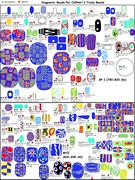
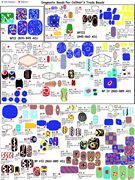
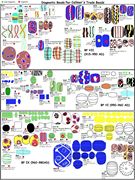
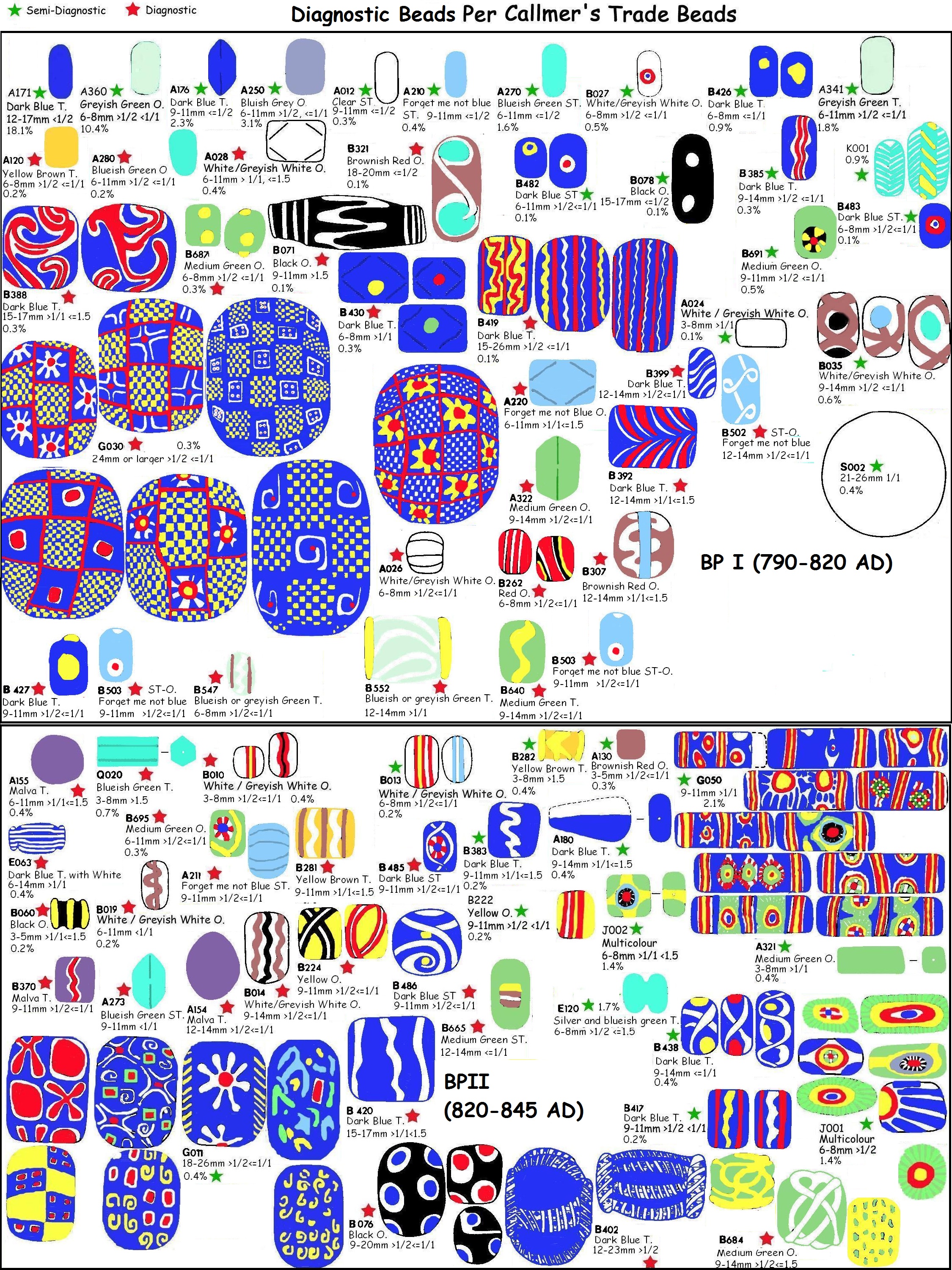
A little while ago there was a request to add new charts to the bead page to show the 'diagnostic' beads. These are the beads that are found only in one time period (red star) or more than twice as often in this time period than any other (green star). These sorts of beads are excellent additions to a necklace or strand for tagging your presentation to a particular time period. A little time finally opened up and these four summary pages were added to the other bead charts to aid in your shopping trips.

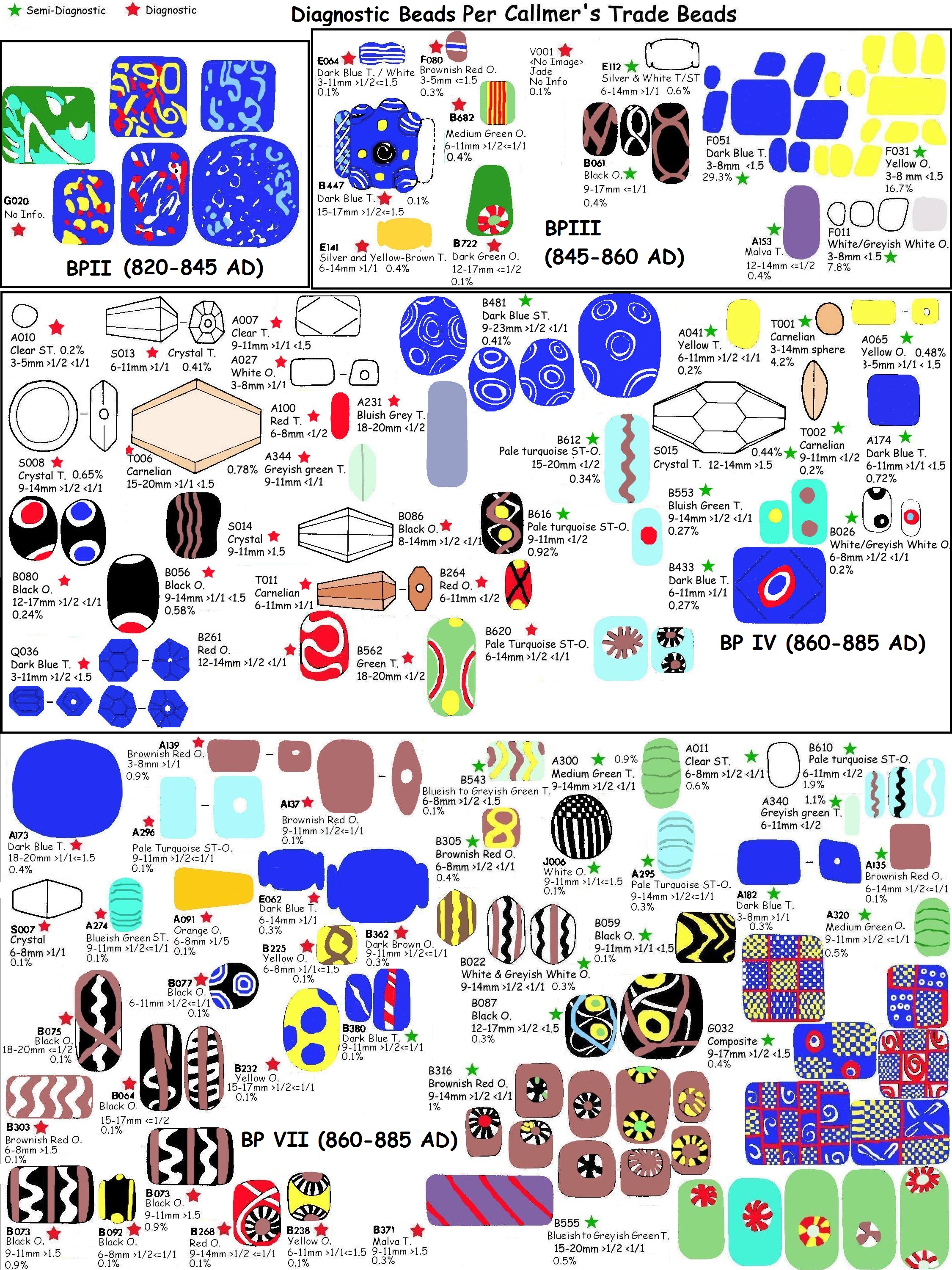
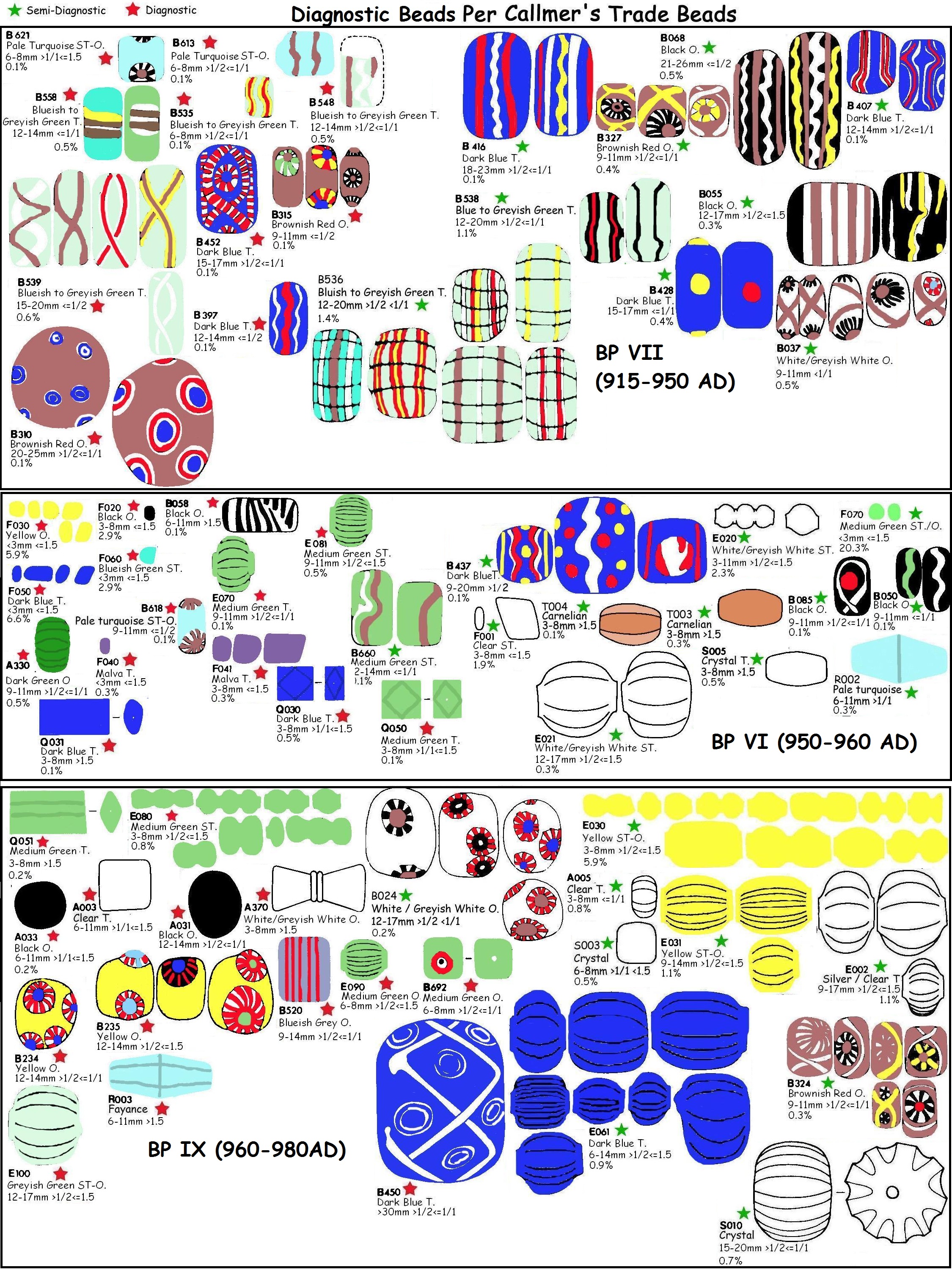
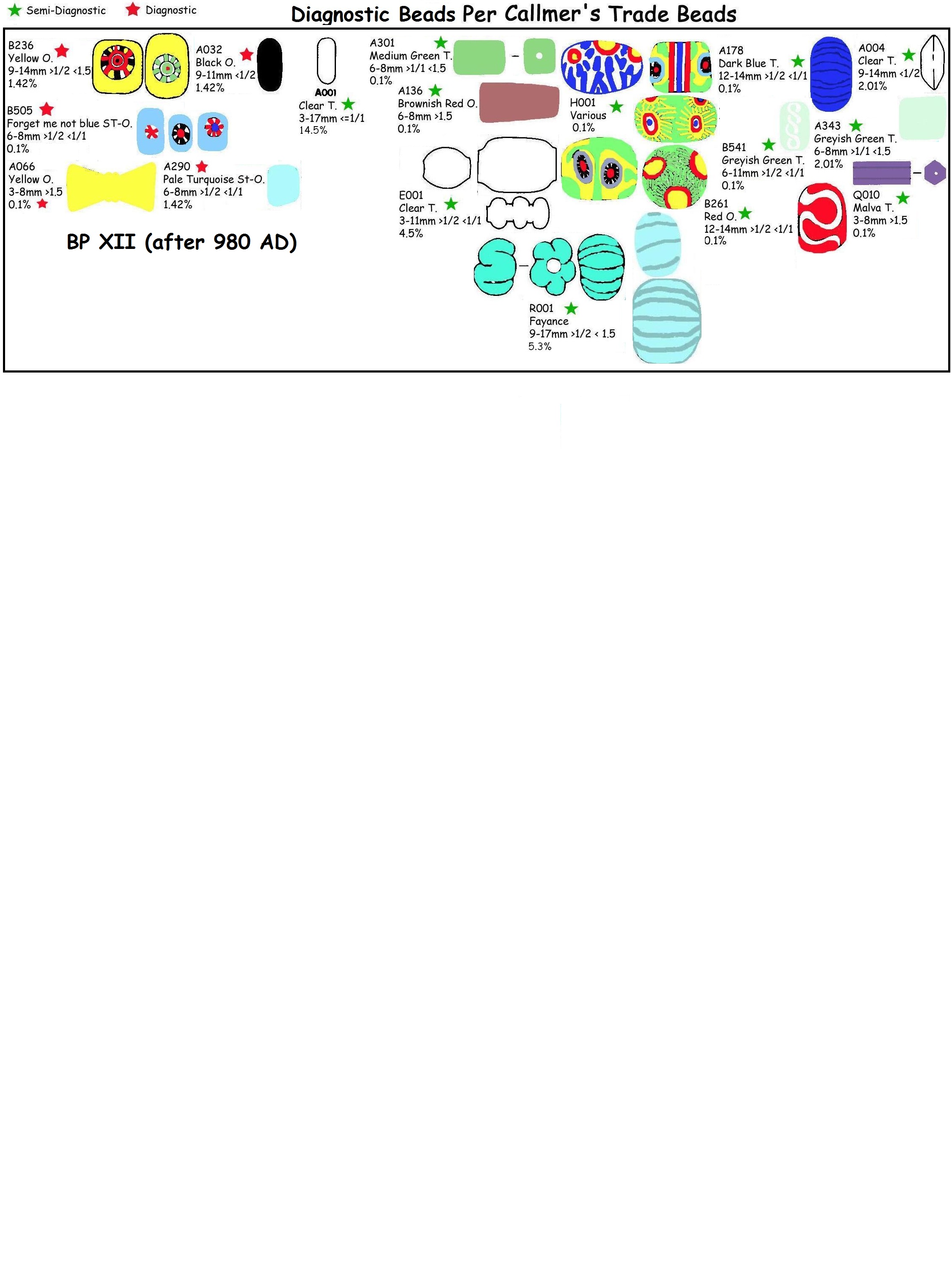
Sunday, October 28, 2012
Tying together a network of friends
This was my third visit to LAM, having previously gone as a tourist in 2006
and as part of the DARC team in 2010. I had already done most of my
"must-see" sightseeing, so this time I was quite content to spend every day
at the site with my friends from Newfoundland and Ontario. Once again, they
were the best part of my experience and I couldn't think of anything I
would rather do than play with them.
My "job" in DARC has evolved into one involving string. On the last visit, I worked a bit on my fishing net but didn't get very far. It turned out that the knot I was using slipped (just fine for lacemaking, where I learned it, but less effective if you want sturdy nets to catch fish). Ragnarr and Bjorn each taught me their preferred netting knot last time out. I took great pleasure this time in stringing up the net, having Ragnarr come over on the first day to inspect my work, and give me a big smile because I was now doing it right. I was able to do a lot of work on the net, including repairs to older sections where there were mistakes. Making a fishing net is a very evocative activity in Newfoundland, where many of the visitors come from fishing families. They enjoy sharing memories of repairing nets or watching their dads do so. I love the personal connection, and seeing how the site goes from being a museum to a "real" place.
On the way back from LAM, we stopped at the Fortress of Louisbourg, where I learned something about how to preserve my hemp net and fishing line with pine pitch. I'll be experimenting, now that I have found a source of pine pitch (my local tack shop). I also got ideas for other things made of rope, such as ladders, monkey fists, and boat bumpers, and will be researching evidence of their use in the Viking Age.
Most of my other string experiments this time were with slyng (whipcording). I made some cord using two colours of wool I had dyed and spun. Eventually, it will be used for straps or decorative trim.
I also used slyng to make a hemp bowstring with Jorunn. We started the braid a few inches down our cords, then looped the top and spliced the loose ends into the slyng. This gave a very sturdy loop for the top of the bowstring. The bottom end was simply finished with a thin cord whipping, and tied to the bow with a bowyer's knot (timber hitch). The bowstring was round and just the right size for the arrow nocks, although it doesn't have much spring. It was fun to contribute to the site by leaving an artefact behind.
Based on the bowstring experience I have decided that my next attempt at a horsehair fishing line will involve slyng. Historically, fishing lines were often made of horsehair, which is both strong and long-lasting. I tried various ways of making a fishing line while at LAM. There is evidence of twisted horsehair fishing lines date from around the 1400's, and the short sections of line were somehow knotted together. Remember, about 30 feet of line is needed, and good horse tails are rarely much longer than about 25 inches. My first attempt with twisted line was a complete failure. The line was just too slippery to be knotted or hold a splice. The next attempt, joining short lines made from plain three-strand braids was equally impossible. Since simple knots didn't work, I tried making a loop and splicing the end bits into my braid. Although splicing a loop worked somewhat better, spliced loops could only be used on one end of the line (loosening the braid and stuffing the ends in didn't work) . I still needed to knot the other end. Splicing a continuous braid might be a little sturdier, but a slyng braid is much tighter than a three-strand braid, so that's what I will be trying next.
The other thing that I enjoyed at LAM was doing the hair of my friends each day. It wasn't exactly rope, but it did involve lots of braiding. I experimented with different braids, found ways to disguise modern hairstyles, and provided another connection point for visitors to relate their daily lives to those of the Viking Age Norse.
Diane, aka Auðr
My "job" in DARC has evolved into one involving string. On the last visit, I worked a bit on my fishing net but didn't get very far. It turned out that the knot I was using slipped (just fine for lacemaking, where I learned it, but less effective if you want sturdy nets to catch fish). Ragnarr and Bjorn each taught me their preferred netting knot last time out. I took great pleasure this time in stringing up the net, having Ragnarr come over on the first day to inspect my work, and give me a big smile because I was now doing it right. I was able to do a lot of work on the net, including repairs to older sections where there were mistakes. Making a fishing net is a very evocative activity in Newfoundland, where many of the visitors come from fishing families. They enjoy sharing memories of repairing nets or watching their dads do so. I love the personal connection, and seeing how the site goes from being a museum to a "real" place.
On the way back from LAM, we stopped at the Fortress of Louisbourg, where I learned something about how to preserve my hemp net and fishing line with pine pitch. I'll be experimenting, now that I have found a source of pine pitch (my local tack shop). I also got ideas for other things made of rope, such as ladders, monkey fists, and boat bumpers, and will be researching evidence of their use in the Viking Age.
Most of my other string experiments this time were with slyng (whipcording). I made some cord using two colours of wool I had dyed and spun. Eventually, it will be used for straps or decorative trim.
I also used slyng to make a hemp bowstring with Jorunn. We started the braid a few inches down our cords, then looped the top and spliced the loose ends into the slyng. This gave a very sturdy loop for the top of the bowstring. The bottom end was simply finished with a thin cord whipping, and tied to the bow with a bowyer's knot (timber hitch). The bowstring was round and just the right size for the arrow nocks, although it doesn't have much spring. It was fun to contribute to the site by leaving an artefact behind.
Based on the bowstring experience I have decided that my next attempt at a horsehair fishing line will involve slyng. Historically, fishing lines were often made of horsehair, which is both strong and long-lasting. I tried various ways of making a fishing line while at LAM. There is evidence of twisted horsehair fishing lines date from around the 1400's, and the short sections of line were somehow knotted together. Remember, about 30 feet of line is needed, and good horse tails are rarely much longer than about 25 inches. My first attempt with twisted line was a complete failure. The line was just too slippery to be knotted or hold a splice. The next attempt, joining short lines made from plain three-strand braids was equally impossible. Since simple knots didn't work, I tried making a loop and splicing the end bits into my braid. Although splicing a loop worked somewhat better, spliced loops could only be used on one end of the line (loosening the braid and stuffing the ends in didn't work) . I still needed to knot the other end. Splicing a continuous braid might be a little sturdier, but a slyng braid is much tighter than a three-strand braid, so that's what I will be trying next.
The other thing that I enjoyed at LAM was doing the hair of my friends each day. It wasn't exactly rope, but it did involve lots of braiding. I experimented with different braids, found ways to disguise modern hairstyles, and provided another connection point for visitors to relate their daily lives to those of the Viking Age Norse.
Diane, aka Auðr
Wednesday, October 10, 2012
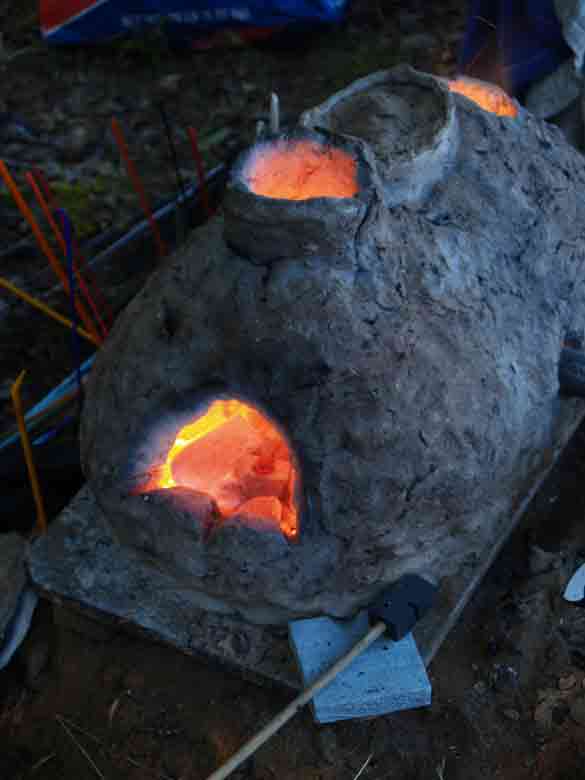
"Bottle" Bead Furnace
For a number of reasons, Neil Peterson and I decided not to
mount an iron smelt over Thanksgiving weekend, but concentrated on the
VA glass bead making furnace research instead.
The initial experiments in this area were framed by the existing clay 'based plates' found at Ribe Denmark. It should be noted that although there is evidence of glass bead production at a couple of Norse trade / urban sites, there has not been a single complete furnace found. Experimental furnaces we have constructed using these artifact footprints have never been truly effective for actually making beads. There may be some other purpose for the clay slabs (?)
There were a number of continuing problems with the large oval furnaces, as suggested by the artifact bases :

1) Very short effective temperature cycles - in the range of 10 minutes
2) Side ports proved very difficult to work inside - limited space and heat onto hands
3) Top ports proved less than ideal - too large an area for effective control of glass
4) Continuing problems with ash coating surface of beads
5) Large internal volume required considerable charcoal expenditures to operate
6) The top ports were quite effected by any cross winds (operated outside)
Taking my experience with charcoal forge fires, and what we have learned from the much larger charcoal fired iron smelting furnaces, I had suggested this as a possible effective layout:


We tried out a couple of early versions of this system, back in 2009. These were abandoned, mainly because they do not conform to the known artifact 'bases'.
The concept here is that all the exhaust gasses are bottled up and forced out of a top vent hole, which in effect creates a working space much like a more modern torch flame.
Returning to this operating system, Neil constructed a new prototype, based some new observations and suggestions from me, back in mid September. This furnace had been air drying for several weeks. Sunday's workshop saw it fired and operated through several charging cycles:
There was no doubt that this new furnace was a massive improvement:
1) Effective operating cycle in the range of 75 minutes (!)
2) Higher working temperatures at the upper port
3) Narrow flame created more effective control of the glass itself
4) Ash greatly reduced (mostly absent)
5) Significantly lower charcoal consumption
6) 'Time per bead' rate greatly reduced
This all creates one of the classic problems in experimental archaeology : 'If you can't get the same results, you can't be doing the same thing they did' vs 'That certainly works - but it does not match the available artifact evidence'.
In the actual absence of any complete furnaces (or even upper fragments) from VA sites, my gut feeling is that the few surviving 'bases' may be from some other process entirely. Annealing pans is one possibility.
Our research and experimentation continues...
(duplicated from 'Hammered Out Bits')
The initial experiments in this area were framed by the existing clay 'based plates' found at Ribe Denmark. It should be noted that although there is evidence of glass bead production at a couple of Norse trade / urban sites, there has not been a single complete furnace found. Experimental furnaces we have constructed using these artifact footprints have never been truly effective for actually making beads. There may be some other purpose for the clay slabs (?)
There were a number of continuing problems with the large oval furnaces, as suggested by the artifact bases :
1) Very short effective temperature cycles - in the range of 10 minutes
2) Side ports proved very difficult to work inside - limited space and heat onto hands
3) Top ports proved less than ideal - too large an area for effective control of glass
4) Continuing problems with ash coating surface of beads
5) Large internal volume required considerable charcoal expenditures to operate
6) The top ports were quite effected by any cross winds (operated outside)
Taking my experience with charcoal forge fires, and what we have learned from the much larger charcoal fired iron smelting furnaces, I had suggested this as a possible effective layout:
We tried out a couple of early versions of this system, back in 2009. These were abandoned, mainly because they do not conform to the known artifact 'bases'.
The concept here is that all the exhaust gasses are bottled up and forced out of a top vent hole, which in effect creates a working space much like a more modern torch flame.
Returning to this operating system, Neil constructed a new prototype, based some new observations and suggestions from me, back in mid September. This furnace had been air drying for several weeks. Sunday's workshop saw it fired and operated through several charging cycles:
 |
| Layout of the Furnace : about 30 cm OD. Annealing pot to left. |
 |
| Lid removed, filling with charcoal. Electric blower used for this test series. |
 |
| Fresh charcoal vents off combustible gasses for about 5 minutes. |
 |
| Stable working flame, working a simple glass bead in the 'stack' |
 |
| End of a working cycle, charcoal has burned away from centre to base. |
1) Effective operating cycle in the range of 75 minutes (!)
2) Higher working temperatures at the upper port
3) Narrow flame created more effective control of the glass itself
4) Ash greatly reduced (mostly absent)
5) Significantly lower charcoal consumption
6) 'Time per bead' rate greatly reduced
This all creates one of the classic problems in experimental archaeology : 'If you can't get the same results, you can't be doing the same thing they did' vs 'That certainly works - but it does not match the available artifact evidence'.
In the actual absence of any complete furnaces (or even upper fragments) from VA sites, my gut feeling is that the few surviving 'bases' may be from some other process entirely. Annealing pans is one possibility.
Our research and experimentation continues...
(duplicated from 'Hammered Out Bits')
Friday, October 5, 2012
Bead Furnace at Bonfield
(Cross posted from Hammered Out Bits )
These images are all by Vandy Simpson, taken at the Bonfield Battle event run each Labour Day by my old friend Steve Muhlberger.
As a continuation of the ongoing experimental research under Neil Peterson, DARC mounted a combination demonstration and hands on session with a possible Viking Age bead working furnace. The furnaces are clay & horse manure construction, fire charcoal, and are based on 'possible' footprints suggested by the archaeology primarily from Ribe Denmark. For a more complete background, see Neil's published research.
Two primary problems are plaguing us with this specific design, which is based on the size of one of the uncovered 'base plates' :
1) Although high enough temperatures can be produced to effectively work the glass, the actual effective time is quite short. Our skill levels are mid level at best, and typically only one semi complex (base plus two colour patterning) can be created in one charcoal fill cycle.
2) Marred surfaces, from flying ash and small particles of burning charcoal are common, almost universal. Artifact beads do not show these effects as common. This strongly suggests we are doing something 'wrong'.
Our next prototype furnace is abandoning the profiles suggested by the artifact bases. Instead I have suggested a design based more on the dynamics of burning charcoal, gathered from experience working with charcoal forges. The concept is to contain the hot gasses to produce an effect more like a torch - then work inside that blast. (An earlier post describes this system.)
There will be a workshop this weekend at Wareham where a few of us will be working with a new prototype. Hopefully there will be a field report with some images later in the week describing the results...
These images are all by Vandy Simpson, taken at the Bonfield Battle event run each Labour Day by my old friend Steve Muhlberger.
As a continuation of the ongoing experimental research under Neil Peterson, DARC mounted a combination demonstration and hands on session with a possible Viking Age bead working furnace. The furnaces are clay & horse manure construction, fire charcoal, and are based on 'possible' footprints suggested by the archaeology primarily from Ribe Denmark. For a more complete background, see Neil's published research.
 |
| Overall view of the set up - inside the 'forge' duggout area |
 |
| Working in the stack, heating new rod to apply decoration |
 |
| Streaks are small pieces of burning charcoal in the vent |
Two primary problems are plaguing us with this specific design, which is based on the size of one of the uncovered 'base plates' :
1) Although high enough temperatures can be produced to effectively work the glass, the actual effective time is quite short. Our skill levels are mid level at best, and typically only one semi complex (base plus two colour patterning) can be created in one charcoal fill cycle.
2) Marred surfaces, from flying ash and small particles of burning charcoal are common, almost universal. Artifact beads do not show these effects as common. This strongly suggests we are doing something 'wrong'.
Our next prototype furnace is abandoning the profiles suggested by the artifact bases. Instead I have suggested a design based more on the dynamics of burning charcoal, gathered from experience working with charcoal forges. The concept is to contain the hot gasses to produce an effect more like a torch - then work inside that blast. (An earlier post describes this system.)
There will be a workshop this weekend at Wareham where a few of us will be working with a new prototype. Hopefully there will be a field report with some images later in the week describing the results...
Subscribe to:
Posts (Atom)